
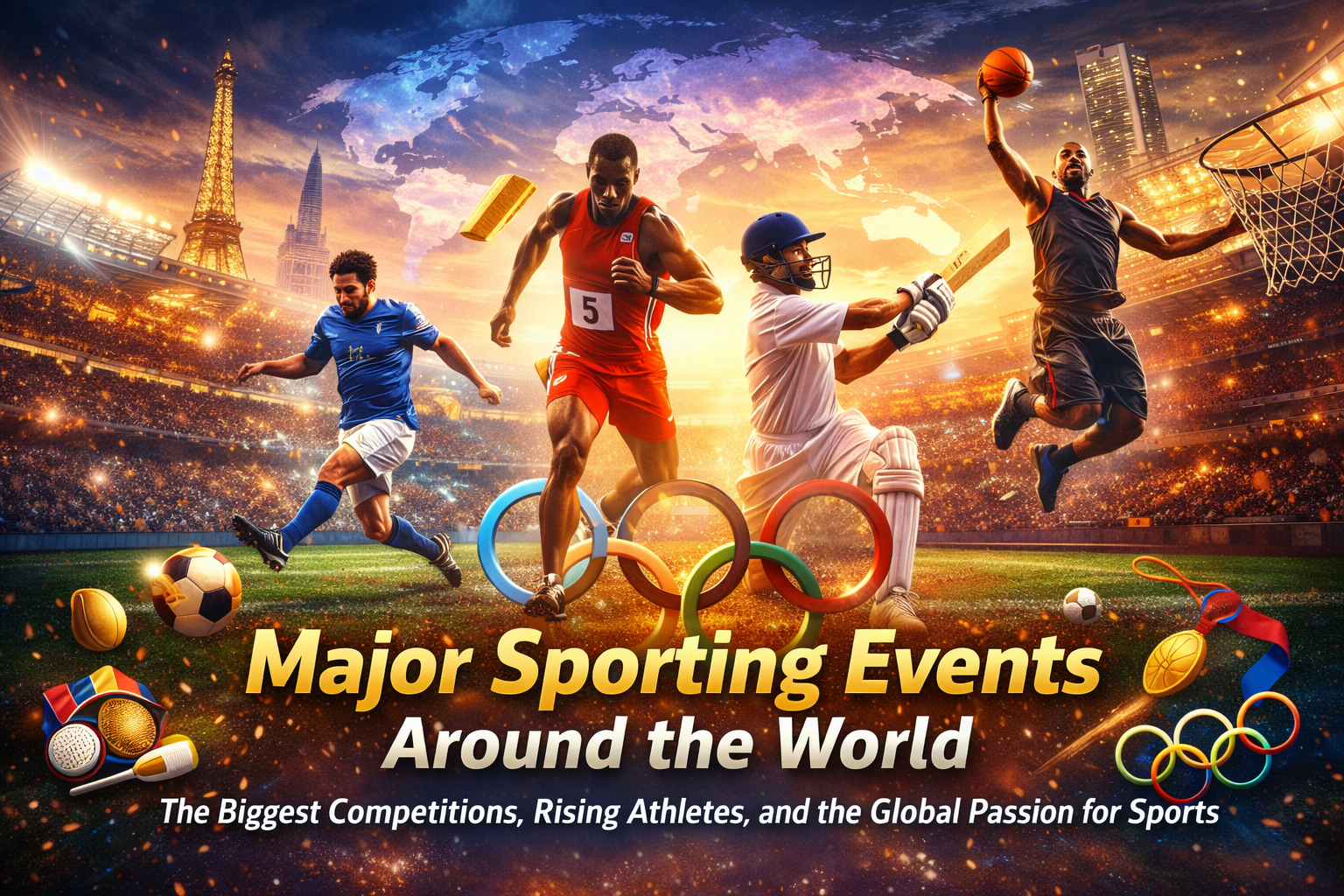
Sports have always played an important role in human culture. From ancient competitions held thousands of years ago to the massive global tournaments watched by billions today, sporting events bring together people from different countries, languages, and backgrounds. Major sporting events are more than just games or competitions. They represent national pride, human determination, and the spirit of competition that inspires millions across the world.
In modern times, international sporting tournaments have grown into massive global spectacles. Stadiums fill with passionate fans, television broadcasts reach every corner of the planet, and athletes become symbols of inspiration for younger generations. The excitement surrounding these events often extends far beyond the stadium, influencing culture, economy, and even politics.
Major sporting events such as international football tournaments, global athletic championships, and worldwide competitions continue to shape the sports industry while creating unforgettable moments in history.
The Global Popularity of Major Sporting Events
One of the most fascinating aspects of major sporting competitions is their ability to attract audiences from every part of the world. Millions of people follow these events closely, discussing matches, celebrating victories, and analyzing performances.
The popularity of these competitions is driven by several key factors:
The excitement of high-level competition
The emotional connection fans feel with their teams
The cultural significance of international sports
The global accessibility through television and digital streaming
Today, technology allows fans to watch live games from their smartphones, laptops, or smart TVs. This accessibility has dramatically increased the reach of sporting events, turning them into worldwide celebrations.
Football Tournaments: The Most Watched Sporting Events
Football remains the most popular sport in the world, and its major tournaments attract enormous global audiences. International competitions featuring national teams create an atmosphere of unity and excitement that few other events can match.
Fans gather in stadiums, cafes, homes, and public viewing areas to watch their teams compete for glory. The emotional intensity of football tournaments often leads to unforgettable moments, legendary goals, and historic victories.
Football competitions also play a significant role in promoting cultural exchange. Supporters from different nations travel across continents to watch matches and celebrate their shared love of the sport.
Olympic Games: A Celebration of Human Achievement
The Olympic Games represent one of the largest and most prestigious sporting events in the world. Athletes from dozens of countries compete in a wide range of sports, from athletics and swimming to gymnastics and martial arts.
The Olympics are unique because they celebrate the diversity of sports and cultures. Competitors train for years, sometimes decades, for the chance to represent their country on the global stage.
The Olympic spirit focuses on three fundamental values:
Excellence
Friendship
Respect
These values encourage athletes to compete at their highest level while maintaining sportsmanship and mutual respect. The Olympic Games also provide smaller nations the opportunity to shine, creating inspiring stories of determination and perseverance.
Cricket Championships and Their Global Influence
Cricket is another sport with enormous international popularity, particularly in regions such as South Asia, Australia, and the United Kingdom. Major cricket tournaments generate tremendous excitement among fans and often dominate sports discussions during their seasons.
Cricket competitions showcase exceptional skill, strategy, and teamwork. Players must demonstrate technical precision, mental focus, and physical endurance throughout long matches.
Large cricket tournaments also contribute significantly to sports broadcasting, advertising, and tourism. Stadiums fill with passionate fans waving flags and cheering for their teams, creating a unique and vibrant atmosphere.
Basketball and the Rise of Global Leagues
Basketball has expanded dramatically in popularity over the past few decades. Major tournaments and professional leagues attract international talent and millions of viewers worldwide.
The sport’s fast-paced nature, dynamic plays, and high-scoring games make it particularly appealing to younger audiences. International competitions often feature emerging stars who later become global sports icons.
Basketball events also demonstrate how sports can influence culture, fashion, and entertainment. Players often become influential figures both on and off the court.
The Economic Impact of Major Sporting Events
Hosting a major sporting event can have a significant economic impact on a country or city. Governments and organizations invest billions of dollars in infrastructure, stadium construction, and tourism development.
Major benefits include:
Increased tourism and international visitors
Global media exposure
Job creation and business opportunities
Long-term infrastructure improvements
However, hosting large events also requires careful planning and financial management. Cities must balance the costs of hosting with the potential long-term benefits.
Despite these challenges, many countries continue to compete for the opportunity to host major tournaments because of the prestige and economic potential involved.
The Role of Technology in Modern Sports
Technology has transformed the way sporting events are organized, broadcast, and experienced by fans.
Modern innovations include:
High-definition broadcasting and streaming services
Instant replay and video assistant referee systems
Data analytics for athlete performance
Virtual and augmented reality viewing experiences
These technological advancements enhance fairness in competitions while also improving the viewing experience for audiences.
Fans can now analyze matches in greater detail, follow statistics in real time, and interact with other supporters through online platforms.
Rising Athletes and the Future of Sports
Every major sporting event introduces new athletes who capture global attention with their exceptional performances. Young competitors often become symbols of hope and inspiration for aspiring players around the world.
These rising stars represent the future of sports. Their dedication, discipline, and perseverance motivate millions of young people to pursue their own athletic dreams.
Sports academies and youth development programs continue to expand globally, helping identify and nurture the next generation of champions.
Sports as a Cultural and Social Force
Beyond competition, sports also serve as powerful cultural and social forces. Major sporting events can promote unity, inspire communities, and encourage healthy lifestyles.
Sports bring people together regardless of nationality, religion, or language. Fans who might otherwise never interact often find common ground through their shared passion for a team or athlete.
This ability to unite diverse groups of people makes sports one of the most influential cultural phenomena in the world.
Conclusion
Major sporting events represent far more than athletic competitions. They are global celebrations of human potential, cultural exchange, and collective excitement. From football tournaments and Olympic competitions to cricket championships and basketball leagues, these events continue to captivate audiences worldwide.
As technology advances and sports continue to evolve, the scale and influence of major competitions will likely grow even further. New athletes will emerge, records will be broken, and fans will continue gathering to witness unforgettable moments.
In a world often divided by differences, major sporting events remind us that the spirit of competition, teamwork, and passion can bring people together in extraordinary ways.
In modern times, international sporting tournaments have grown into massive global spectacles. Stadiums fill with passionate fans, television broadcasts reach every corner of the planet, and athletes become symbols of inspiration for younger generations. The excitement surrounding these events often extends far beyond the stadium, influencing culture, economy, and even politics.
Major sporting events such as international football tournaments, global athletic championships, and worldwide competitions continue to shape the sports industry while creating unforgettable moments in history.
The Global Popularity of Major Sporting Events
One of the most fascinating aspects of major sporting competitions is their ability to attract audiences from every part of the world. Millions of people follow these events closely, discussing matches, celebrating victories, and analyzing performances.
The popularity of these competitions is driven by several key factors:
The excitement of high-level competition
The emotional connection fans feel with their teams
The cultural significance of international sports
The global accessibility through television and digital streaming
Today, technology allows fans to watch live games from their smartphones, laptops, or smart TVs. This accessibility has dramatically increased the reach of sporting events, turning them into worldwide celebrations.
Football Tournaments: The Most Watched Sporting Events
Football remains the most popular sport in the world, and its major tournaments attract enormous global audiences. International competitions featuring national teams create an atmosphere of unity and excitement that few other events can match.
Fans gather in stadiums, cafes, homes, and public viewing areas to watch their teams compete for glory. The emotional intensity of football tournaments often leads to unforgettable moments, legendary goals, and historic victories.
Football competitions also play a significant role in promoting cultural exchange. Supporters from different nations travel across continents to watch matches and celebrate their shared love of the sport.
Olympic Games: A Celebration of Human Achievement
The Olympic Games represent one of the largest and most prestigious sporting events in the world. Athletes from dozens of countries compete in a wide range of sports, from athletics and swimming to gymnastics and martial arts.
The Olympics are unique because they celebrate the diversity of sports and cultures. Competitors train for years, sometimes decades, for the chance to represent their country on the global stage.
The Olympic spirit focuses on three fundamental values:
Excellence
Friendship
Respect
These values encourage athletes to compete at their highest level while maintaining sportsmanship and mutual respect. The Olympic Games also provide smaller nations the opportunity to shine, creating inspiring stories of determination and perseverance.
Cricket Championships and Their Global Influence
Cricket is another sport with enormous international popularity, particularly in regions such as South Asia, Australia, and the United Kingdom. Major cricket tournaments generate tremendous excitement among fans and often dominate sports discussions during their seasons.
Cricket competitions showcase exceptional skill, strategy, and teamwork. Players must demonstrate technical precision, mental focus, and physical endurance throughout long matches.
Large cricket tournaments also contribute significantly to sports broadcasting, advertising, and tourism. Stadiums fill with passionate fans waving flags and cheering for their teams, creating a unique and vibrant atmosphere.
Basketball and the Rise of Global Leagues
Basketball has expanded dramatically in popularity over the past few decades. Major tournaments and professional leagues attract international talent and millions of viewers worldwide.
The sport’s fast-paced nature, dynamic plays, and high-scoring games make it particularly appealing to younger audiences. International competitions often feature emerging stars who later become global sports icons.
Basketball events also demonstrate how sports can influence culture, fashion, and entertainment. Players often become influential figures both on and off the court.
The Economic Impact of Major Sporting Events
Hosting a major sporting event can have a significant economic impact on a country or city. Governments and organizations invest billions of dollars in infrastructure, stadium construction, and tourism development.
Major benefits include:
Increased tourism and international visitors
Global media exposure
Job creation and business opportunities
Long-term infrastructure improvements
However, hosting large events also requires careful planning and financial management. Cities must balance the costs of hosting with the potential long-term benefits.
Despite these challenges, many countries continue to compete for the opportunity to host major tournaments because of the prestige and economic potential involved.
The Role of Technology in Modern Sports
Technology has transformed the way sporting events are organized, broadcast, and experienced by fans.
Modern innovations include:
High-definition broadcasting and streaming services
Instant replay and video assistant referee systems
Data analytics for athlete performance
Virtual and augmented reality viewing experiences
These technological advancements enhance fairness in competitions while also improving the viewing experience for audiences.
Fans can now analyze matches in greater detail, follow statistics in real time, and interact with other supporters through online platforms.
Rising Athletes and the Future of Sports
Every major sporting event introduces new athletes who capture global attention with their exceptional performances. Young competitors often become symbols of hope and inspiration for aspiring players around the world.
These rising stars represent the future of sports. Their dedication, discipline, and perseverance motivate millions of young people to pursue their own athletic dreams.
Sports academies and youth development programs continue to expand globally, helping identify and nurture the next generation of champions.
Sports as a Cultural and Social Force
Beyond competition, sports also serve as powerful cultural and social forces. Major sporting events can promote unity, inspire communities, and encourage healthy lifestyles.
Sports bring people together regardless of nationality, religion, or language. Fans who might otherwise never interact often find common ground through their shared passion for a team or athlete.
This ability to unite diverse groups of people makes sports one of the most influential cultural phenomena in the world.
Conclusion
Major sporting events represent far more than athletic competitions. They are global celebrations of human potential, cultural exchange, and collective excitement. From football tournaments and Olympic competitions to cricket championships and basketball leagues, these events continue to captivate audiences worldwide.
As technology advances and sports continue to evolve, the scale and influence of major competitions will likely grow even further. New athletes will emerge, records will be broken, and fans will continue gathering to witness unforgettable moments.
In a world often divided by differences, major sporting events remind us that the spirit of competition, teamwork, and passion can bring people together in extraordinary ways.
Discussion
0 comments💭
No comments yet. Be the first to share your thoughts!
💝 Subscribe to join the discussion and share your thoughts.